







Fire safety duties for the responsible person: what you must have in place in 2026
If you own, manage or control a building that other people use, fire safety law almost certainly makes you a “responsible person”, and the duties that come with that title have grown sharper in the last three years. This guide sets out, in plain English, who the responsible person is, what you must do, what has changed recently, and how to check your building is on the right side of the line. It applies across every sector, from a housing block to a hospital, a school, a barracks or a fire station.
Who is the responsible person?
The term comes from the Regulatory Reform (Fire Safety) Order 2005, the main piece of fire safety law for non-domestic premises and the common parts of multi-occupied residential buildings in England. In simple terms, the responsible person is:
- the employer, for a workplace;
- the owner or the person in control of the premises, in other cases.
A building can have more than one responsible person. In a multi-tenanted building, the landlord and each occupying employer can each hold duties for the parts they control. Where that happens, the law now expects them to cooperate and coordinate, not to assume someone else has it covered.
Your core duty: a suitable and sufficient fire risk assessment
At the heart of the Fire Safety Order is Article 9: the responsible person must carry out a suitable and sufficient fire risk assessment of the premises, identify the fire precautions needed, and keep the assessment up to date. Everything else follows from this. If your fire risk assessment is old, thin, or sitting in a drawer, that is the first gap to close.
What has changed recently (and why your regime may be out of date)
Three sets of changes since 2021 have tightened what a responsible person must do. If your fire safety arrangements were set up before then, they need a refresh.
1. The Fire Safety Act 2021 clarified that, in multi-occupied residential buildings, the responsible person’s assessment must cover the building’s structure, external walls (including cladding and balconies) and flat entrance doors. It removed the ambiguity about what was in scope.
2. The Fire Safety (England) Regulations 2022 came into force on 23 January 2023 and added specific, practical duties for multi-occupied residential buildings. The main ones:
| Building | Key duties |
| All buildings with two or more domestic premises and common parts | Give residents fire safety instructions and information on the importance of fire doors |
| Storeys over 11 metres | Quarterly checks of communal fire doors and, on a best-endeavour basis, annual checks of flat entrance doors |
| High-rise (18 metres or more, or 7+ storeys) | Secure information box, wayfinding signage, monthly checks of firefighting lifts and equipment, building floor plans and external wall information shared with the fire and rescue service |
3. Section 156 of the Building Safety Act 2022 amended the Fire Safety Order from 1 October 2023. Every responsible person, in every regulated building, must now:
- record their fire risk assessment in full (not just the “significant findings” as before);
- record their fire safety arrangements, showing how fire safety is managed day to day;
- record who they are, including a UK-based address, and the identity of anyone appointed to carry out the assessment;
- cooperate and coordinate with other responsible persons in the same building;
- appoint only a competent person to help with the assessment.
There is also a newer duty worth knowing if you manage higher-risk residential blocks: the Fire Safety (Residential Evacuation Plans) (England) Regulations 2025 came into force on 6 April 2026, introducing person-centred fire risk assessments and emergency evacuation statements for residents who may need help to evacuate. If that applies to your buildings, treat it as a live workstream in its own right.
A checklist: is your building compliant?
Work through these. A “no” or “not sure” is a job to do.
- Recorded fire risk assessment, suitable and sufficient, reviewed and in date, covering structure and external walls where relevant.
- Recorded fire safety arrangements, so anyone can see how fire safety is managed here.
- A competent assessor, with their identity recorded, and your own details (including a UK address) recorded.
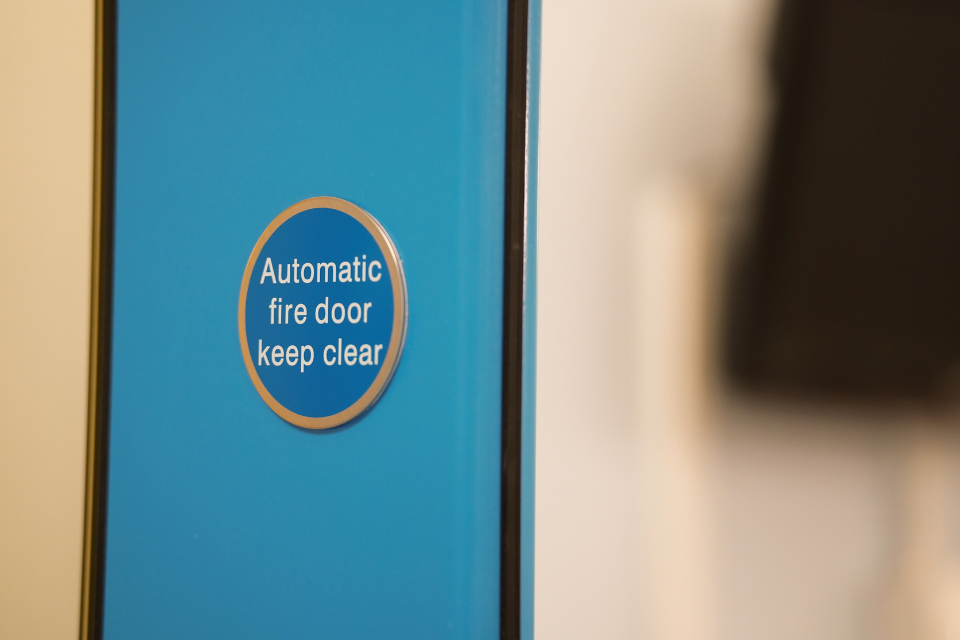
- A working fire door regime, the right checks at the right frequency, carried out and documented, against the current standard (the fire door code of practice was revised in 2026, so make sure your checks and specifications reference it).
- Resident information provided where required, and evacuation arrangements, including for residents who need support, where the 2025 regulations apply.
- Cooperation agreed with any other responsible persons in the building.
- Records kept together, so the evidence is there when a fire officer, insurer or resident asks. This is the same “golden thread” thinking the Building Safety Act expects for higher-risk buildings.
Getting these right is what the duty is really about. The penalties for failing exist (they range from fines to, for the most serious cases, imprisonment), but the better reason to act is the obvious one: these duties protect the people who live in, work in and use your buildings.
Doing it properly, with the right support
Most organisations meet these duties with help: a competent assessor for the fire risk assessment, and a delivery partner for the physical works and checks that flow from it. The two need to join up. A fire risk assessment that identifies actions is only as good as the programme that closes them, and the records that prove it. Agreeing up front who assesses, who remediates, and who holds the evidence is what turns a pile of duties into a defensible, well-run building.
This is the kind of work AXIS CLC delivers across the public sector: fire risk assessment support, fire door surveys and remediation, active and passive fire works, and the wider compliance programme around them, delivered by the group’s integrated fire team. It sits within our fire safety and wider compliance services.
Next step: If you want to check your building meets its responsible person duties, book a fire compliance review with our team. And for the detail behind duty 4, read our companion guide on the revised fire door standard: BS 8214:2026: what changed in the fire door code of practice
Sources:
Regulatory Reform (Fire Safety) Order 2005; Fire Safety Act 2021
Fire Safety (England) Regulations 2022 and gov.uk fact sheets (in force 23 January 2023)
Section 156, Building Safety Act 2022 guidance (in force 1 October 2023)
Fire Safety (Residential Evacuation Plans) (England) Regulations 2025 (in force 6 April 2026)